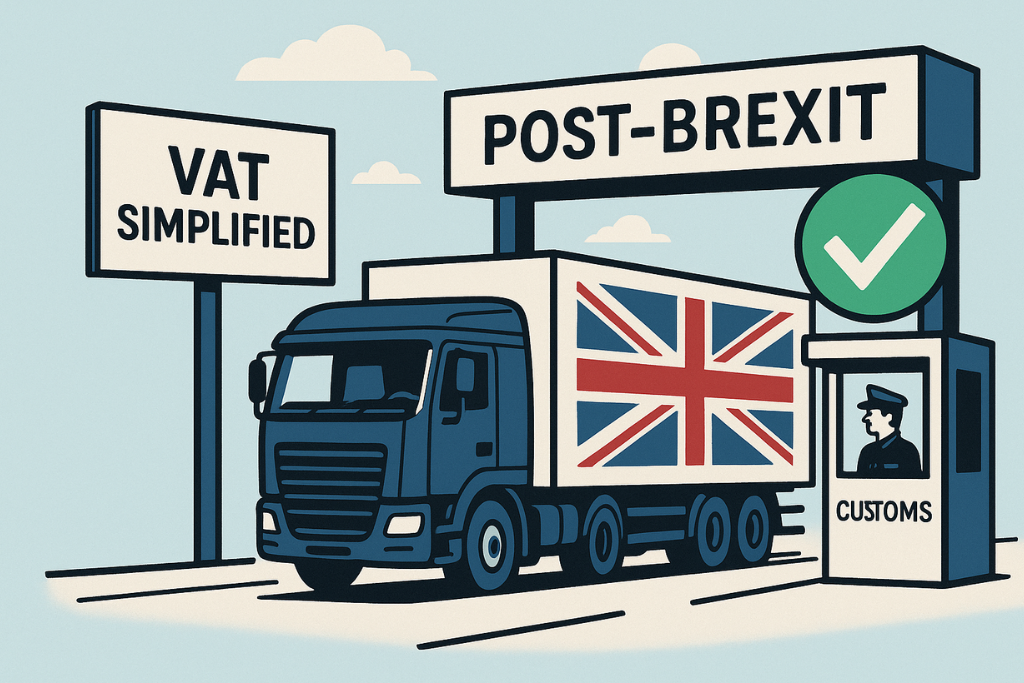
The Brexit transition has fundamentally transformed how UK businesses approach cross-border trade with the EU. What once was a seamless movement of goods within a single market has evolved into a complex web of VAT regulations, customs procedures, and compliance requirements. For UK businesses navigating this new landscape, the question isn’t whether they’ll face VAT complexity; it’s how effectively they can minimize it through strategic logistics planning.
Are you prepared for the new VAT reality?
Since January 1, 2021, UK businesses have found themselves operating in an entirely different VAT environment. UK businesses can no longer use their UK VAT number to apply simplification measures within their supply chains, such as acting as the intermediary party in triangulation and operating a call-off stock. This fundamental shift has created operational challenges that many businesses continue to grapple with today.
The implications extend far beyond simple paperwork. Every cross-border transaction now requires careful consideration of VAT registration requirements in destination countries, proper documentation, and adherence to new digital reporting standards. The old assumptions about intra-EU trade simply no longer apply when dealing with UK-EU commerce.
What VAT challenges are UK businesses really facing?
The post-Brexit VAT landscape presents multiple layers of complexity that businesses must navigate simultaneously. For B2B services, sales of cross-border purchases of services from one business to another (B2B) remain subject to tax in the country of the customer (with some exceptions). However, this apparent continuity masks underlying complications in documentation and compliance procedures.
Digital services face particularly stringent requirements. The £8,818 annual threshold for cross-border sales of digital services to EU consumers no longer applies. Organisations have to charge VAT at the rate where the customer is based and declare those sales to the relevant EU member state. This change has forced many UK digital service providers to completely restructure their VAT compliance systems.
For goods trading, the challenges multiply exponentially. Businesses must now manage customs declarations, origin certifications, and VAT accounting across multiple jurisdictions. Each EU member state maintains its own VAT registration thresholds and compliance requirements, creating a patchwork of obligations that can overwhelm even experienced logistics teams.
How can smart logistics transform your VAT compliance?
The answer to post-Brexit VAT complexity isn’t just better accounting, it’s fundamentally smarter logistics planning. Modern logistics solutions are increasingly incorporating VAT optimisation as a core component of supply chain strategy. This integration represents a shift from viewing VAT as an administrative burden to treating it as a strategic business consideration.
Smart warehousing strategies can significantly reduce VAT exposure and compliance complexity. By strategically positioning inventory within the EU through fulfillment centers or third-party logistics providers, UK businesses can minimize cross-border transactions and maintain more predictable VAT obligations. This approach transforms multiple complex international transactions into simpler domestic distributions within each market.
Technology integration plays a crucial role in this transformation. Customs now use AI to check documents and HS codes. They want the right country-of-origin details. Businesses that leverage compatible technology systems can ensure their documentation meets these enhanced requirements while reducing manual processing errors that often trigger costly delays and penalties.
Which logistics strategies deliver the best VAT results?
Route optimisation has emerged as one of the most effective tools for VAT minimisation. By carefully planning shipping routes and consolidation points, businesses can reduce the number of VAT jurisdictions they encounter and streamline their compliance obligations. This might involve routing goods through specific EU entry points that offer favorable VAT treatment or utilizing bonded warehouse facilities to defer VAT obligations until final distribution.
Inventory positioning strategies can dramatically simplify VAT calculations. Rather than shipping individual orders from the UK to multiple EU destinations, smart logistics involves pre-positioning stock in strategically located EU warehouses. This approach converts complex cross-border B2C transactions into simpler domestic fulfillment operations, often reducing both VAT complexity and overall logistics costs.
Partnership strategies with EU-based logistics providers can provide access to local VAT expertise and systems, eliminating the need for businesses to develop these capabilities internally. Many third-party logistics providers now offer integrated VAT services, handling everything from registration to filing returns, allowing UK businesses to focus on their core operations.
What should your next steps be?
The most successful UK businesses in the post-Brexit environment are those that have proactively redesigned their logistics networks around VAT optimisation principles. This requires moving beyond traditional cost-per-shipment calculations to consider the total cost of VAT compliance, including registration fees, filing requirements, and potential penalties for non-compliance.
Start by conducting a comprehensive audit of your current cross-border transactions. Identify which routes and products generate the most VAT complexity, and evaluate whether alternative logistics arrangements could simplify these obligations. Consider whether strategic inventory positioning might reduce your exposure to multiple VAT jurisdictions.
Technology investment should focus on systems that integrate VAT calculation with logistics planning and management. The most effective solutions treat VAT as a logistics constraint, automatically optimizing shipping routes and methods to minimize total tax and compliance costs.
Remember that VAT regulations continue to evolve, and staying compliant requires ongoing attention to regulatory changes across multiple jurisdictions. Logistics UK’s President Phil Roe called for a “swift implementation” of the revisions to border checks announced as part of the UK-EU reset summit so the UK can start to reap the benefits of smoother trade once again. Smart logistics planning must remain flexible enough to adapt to these continuing changes.
The post-Brexit VAT landscape undoubtedly presents challenges, but it also creates opportunities for businesses that approach it strategically. By integrating VAT optimisation into logistics planning, UK businesses can not only minimize compliance complexity but also often reduce their overall operational costs while maintaining competitive service levels in EU markets. The key lies in viewing VAT not as an unavoidable burden, but as a logistics parameter that can be optimized through smart planning and execution.
Ready to streamline your cross-border operations? Contact us today to start integrating VAT optimisation into your logistics planning.